Context
Multiple bureaus, shared platforms, and policy constraints that make “UX theater” expensive. The job was unification without pretending freedom that didn’t exist.
01Problem
Two related bureau programs sat on shared low-code backends. Policy made custom polish expensive, but teams kept designing as if the stack were open, and burned time on work the platform would never ship.
02Opportunity
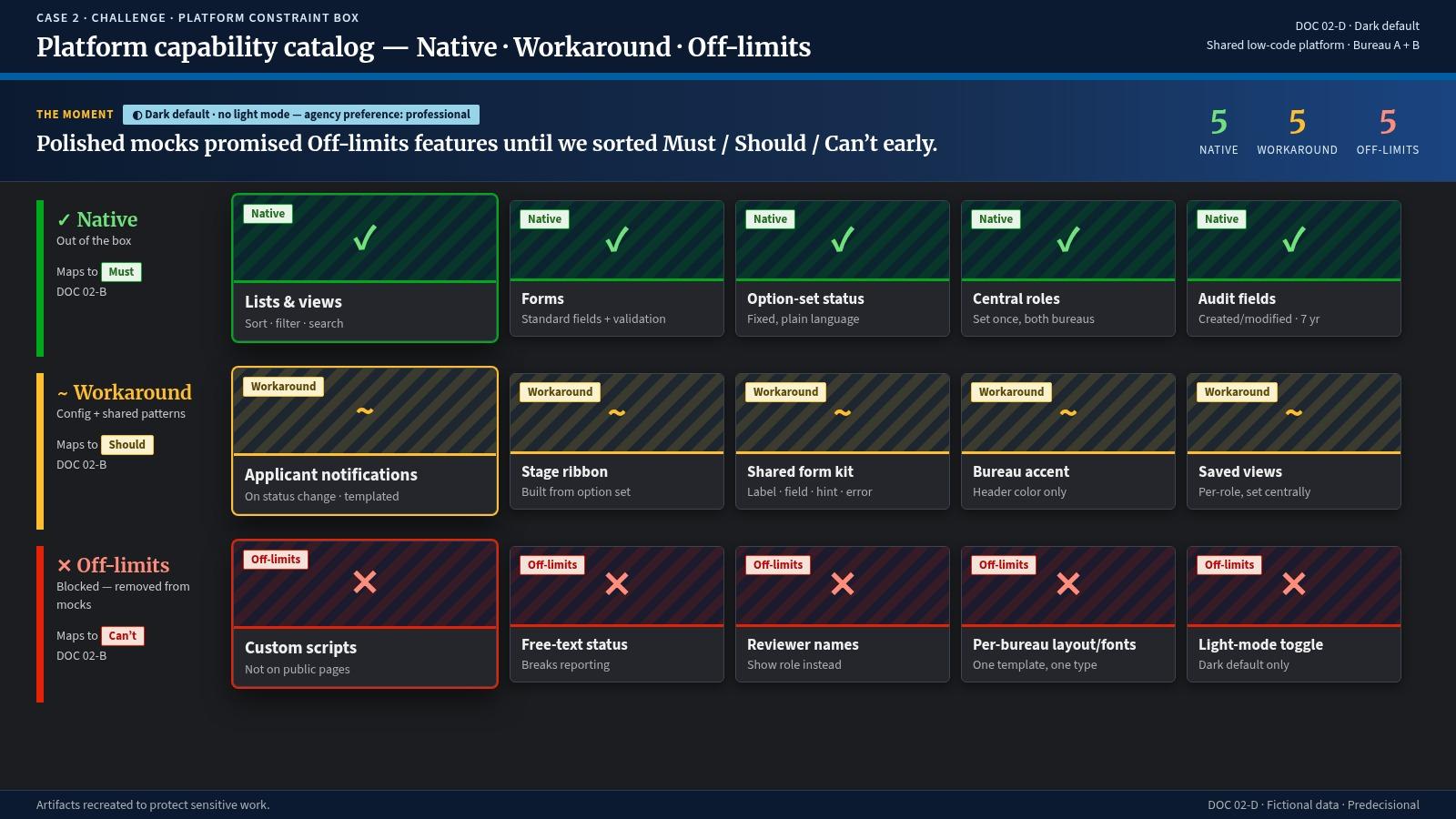
Make the hard edges legible first. What was native, what was a workaround, and what was off-limits. Then align both programs on a wireframe strategy juniors could reuse after I left.
03Constraint
Shared low-code backends for internal users only. One program also needed a public-facing front end on a separate portal class, so what could ship native differed by audience, not just by bureau. Catalog first: Native / Workaround / Off-limits.
Constraint isn’t the enemy of craft, it’s the brief.
Approach
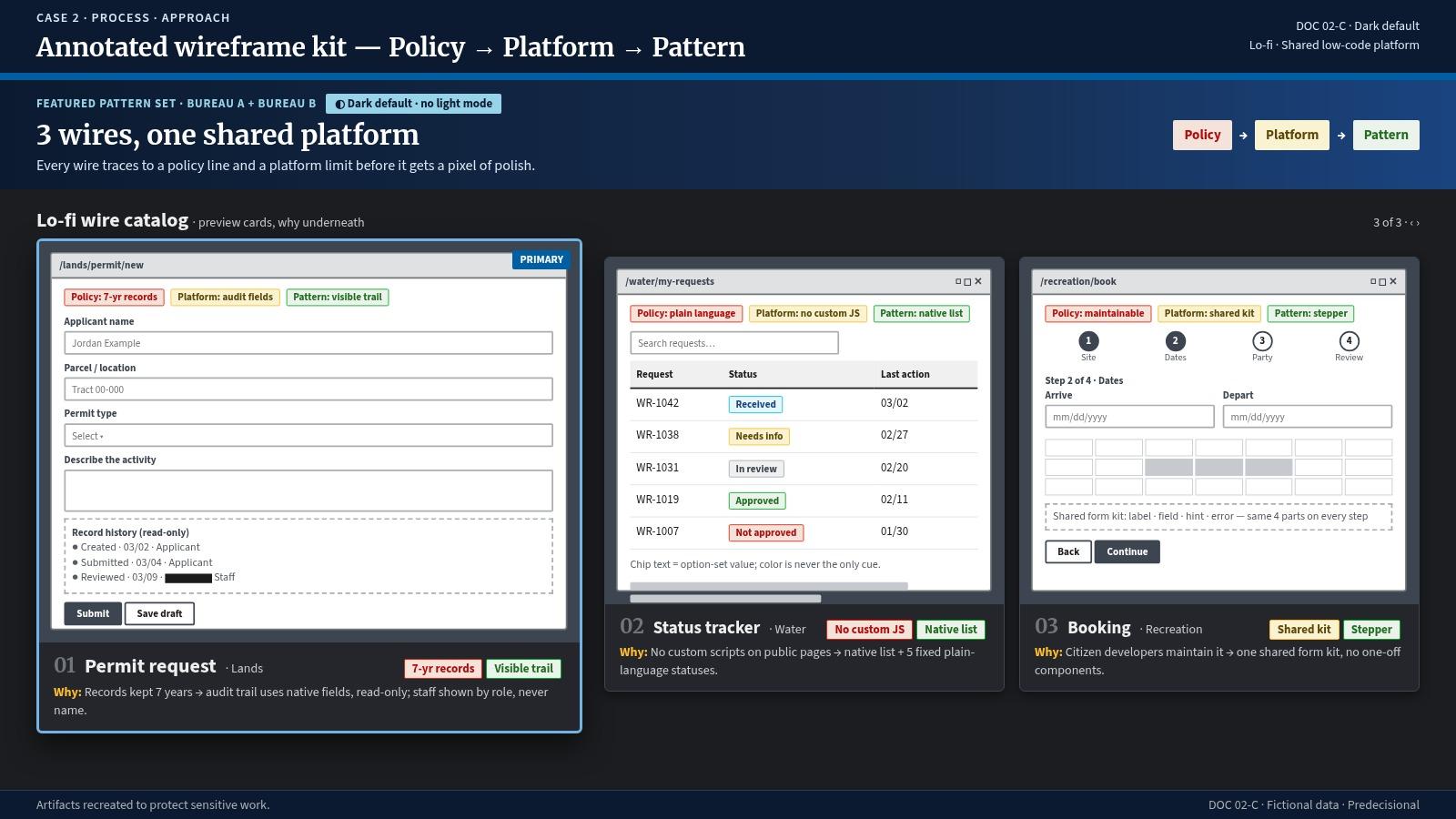
- Translated policy into design constraints teams could use
- Wireframe-led strategy for cross-bureau alignment
- Mentored designers through ambiguous federal delivery
Outcomes
- Wireframe strategy reused across Federal Agency efforts
- Junior designers mentored into constraint-fluent practice
- Contract extended on the strength of platform alignment work
Artifacts
Reflection
Constraint isn’t the enemy of craft, it’s the brief. Influence shows up in what gets reused after you leave.